Staying Ahead of the Small Stuff
Before you touch anything, run through three quick checks. These sort almost every repair into the right hands.
Can you see the whole problem? A wobbly hinge, a torn screen, a dripping aerator. If the entire fault is in front of you, you can usually fix it. If you are guessing at what is behind a wall or under a floor, you are no longer repairing. You are exploring.
Is water, electricity, or weight involved? A leak that wets framing, wiring inside a box, or anything that supports a structure changes the math. These three carry consequences that go well past the original problem.
What happens if your fix does not hold? Reattaching a cabinet pull that fails again is a ten minute redo. A drain repair that fails behind drywall takes the wall with it.
Quick Answer: Soft, stained, or bubbling drywall almost always means moisture has gotten into the board. A brown or yellow stain points to a leak above or behind the wall, bubbling paint means water is trapped under the surface, and a spongy or crumbling feel means the gypsum core has broken down. The fix is never just cosmetic. You have to find and stop the water source first, dry everything out, then cut back to sound board and refinish, or the same spot fails again within a season.
You reach up to hang a picture near the lanai door and the wall gives a little under the nail, softer than drywall should ever feel. Look closer and there is a faint coffee-colored ring you had not noticed, the paint has a slight blister to it, and when you press with your thumb the surface dimples instead of holding firm. That is drywall telling you water has been where it should not be, and on a home that lives in tropical humidity, that message shows up more often than most homeowners expect.
Drywall is gypsum pressed between two layers of paper, and it is built for dry conditions. Once moisture gets into it, whether from a slow roof or plumbing leak, condensation, or just months of damp island air, the paper feeds mold and the gypsum core loses its strength. The symptoms you see on the surface are the late chapter of a story that started behind the wall. Here is how to read those signs, figure out where the water is coming from, and handle the repair so the wall stays sound instead of restaining and softening again.
What Soft, Stained, or Bubbling Drywall Is Actually Telling You
Drywall does not stain, bubble, or go soft on its own. Every one of those symptoms is the surface reacting to water that has found its way into the board, and the pattern of the damage tells you a lot about where that water is coming from and how long it has been there.
The paper facing is the first thing to react, discoloring and lifting as moisture wicks through it. The gypsum core is next, absorbing water like a sponge, swelling, and losing the rigidity that lets it hold a fastener or carry a coat of paint. Given enough time and moisture, the paper becomes food for mold, and that is where a cosmetic problem turns into an air-quality one. The important thing to understand is that the wall is a symptom, not the source. Something is putting water into that gypsum, and until you find it, any patch you apply is just a fresh surface for the same moisture to ruin.
Reading the Signs: What Each Symptom Means
Different kinds of moisture leave different fingerprints. Learning to tell them apart helps you and whoever repairs the wall targets the actual cause instead of guessing.
Brown or yellow staining: A tea-colored or rust-tinted ring with a darker edge signals water traveling through the board. A ceiling stain points to a roof or pipe above; a low wall stain suggests water wicking upward.
Bubbling or peeling paint: When paint blisters, lifts, or flakes, moisture is trapped between the film and the drywall. Painting back over it without solving the water only buys a few weeks before the new coat bubbles.
Soft, spongy, or crumbling board: If the wall dimples under gentle pressure, feels spongy, or sheds a crumbly texture, the gypsum core has broken down structurally. Soft board will not hold a fastener and generally has to be replaced.
Warping, bulging, or sagging: A wall or ceiling that bows, bulges, or sags is holding trapped water, or the board has swelled and deformed. On a ceiling especially, sagging drywall is a sign to take seriously.
A musty smell or a hollow tap: Sometimes the surface still looks passable but your nose knows first. A persistent musty odor hints at mold behind the board, and a dull, hollow tap can flag deteriorated drywall or a void.
TIP: Before you assume the worst, map the damage in daylight or with a bright flashlight, and note whether it is high or low on the wall, near plumbing, or under a roofline. A moisture reading above roughly fifteen percent in the board confirms active water even when the surface looks only lightly marked, and that pattern is the fastest way to point a repair at the real source.
Why Island Homes See This More Than Most
Living in the tropics changes the math on drywall. The same wall that would stay dry for decades in an arid climate faces a steady, year-round moisture load here, and a handful of local conditions stack the odds.
Constant high humidity: Warm, damp air is the background condition on Maui, and drywall is porous enough to pick up ambient moisture over time. Indoor air is healthiest and least mold-prone when relative humidity stays in the thirty to fifty percent range, and trouble climbs once it pushes past sixty percent. In a closed-up room, a bathroom without good ventilation, or a vacation home shut tight between guests, indoor humidity can sit high enough for long enough that walls never fully dry and mold gets a foothold.
Leaks that hide in the rain: Frequent tropical downpours find every weak point in a roof, a window seal, or flashing around a lanai. A small leak that only opens up during heavy rain can soak the same patch of drywall again and again, drying between storms just enough that you never catch it until the stain finally shows.
Salt air and coastal exposure: Homes closer to the water take on salt-laden air that keeps surfaces damp and accelerates corrosion on the fasteners and fixtures around a wall. That coastal dampness adds to the moisture load drywall has to shed.
Condensation you never see: Cool interior surfaces meeting warm humid air produce condensation inside wall cavities and around uninsulated spots, wetting the back of the board where you would never think to look until it bleeds through to the finished side.
Put together, these conditions mean island drywall rarely fails from one dramatic flood. More often it is the slow, repeated dampness of the climate finding a wall that was never quite dry to begin with.
Finding the Moisture Source Before You Patch
The single most common mistake with damaged drywall is skipping straight to the patch. If the water is still getting in, a beautiful repair will restain within the season. Sorting out the source comes first, and it takes a little detective work.
Follow the water uphill: Water travels down and sideways before it shows, so the stain sits below where it entered. A ceiling stain sends you to the roof; a wall stain, to the pipe or window above.
Separate a leak from condensation: Tape aluminum foil flat against the suspect area for a day. Moisture behind the foil comes from inside the wall, while moisture on the room side points to humidity and condensation instead.
Check the usual suspects: The repeat offenders are roof and flashing leaks after heavy rain, worn seals around windows and lanai doors, slow leaks behind bathrooms and kitchens, and poorly vented rooms pumping steam into walls.
Warning: Do not paint or seal over a moldy or still-damp surface hoping to lock it in. Paint applied over mold or wet board will not bond, it peels, and sealing moisture inside the wall lets mold keep spreading where you cannot see it. If a damp or moldy patch is larger than roughly a three-by-three-foot square, that is generally past a simple do-it-yourself cleanup and worth having assessed, because mold can begin growing on wet material within about twenty-four to forty-eight hours and porous materials that stay wet often cannot be fully cleaned and have to be replaced.
What a Proper Repair Involves
Once the water source is stopped and the area has dried, restoring the wall follows a sequence that protects you from a repeat failure. Rushing any step is what leaves you doing the job twice.
Dry completely before anything else: Everything inside the wall cavity must reach a stable moisture level before new material goes up. Wet material trapped behind fresh drywall is a guaranteed callback.
Cut back to sound board: Any drywall that is soft, crumbling, or visibly moldy comes out, cut back to firm framing. Saturated material that has grown mold is replaced, not patched.
Address the framing and fasteners: With the board open, check the studs, plates, and fasteners behind it, especially in a coastal home where salt air corrodes metal. Sound framing holds better.
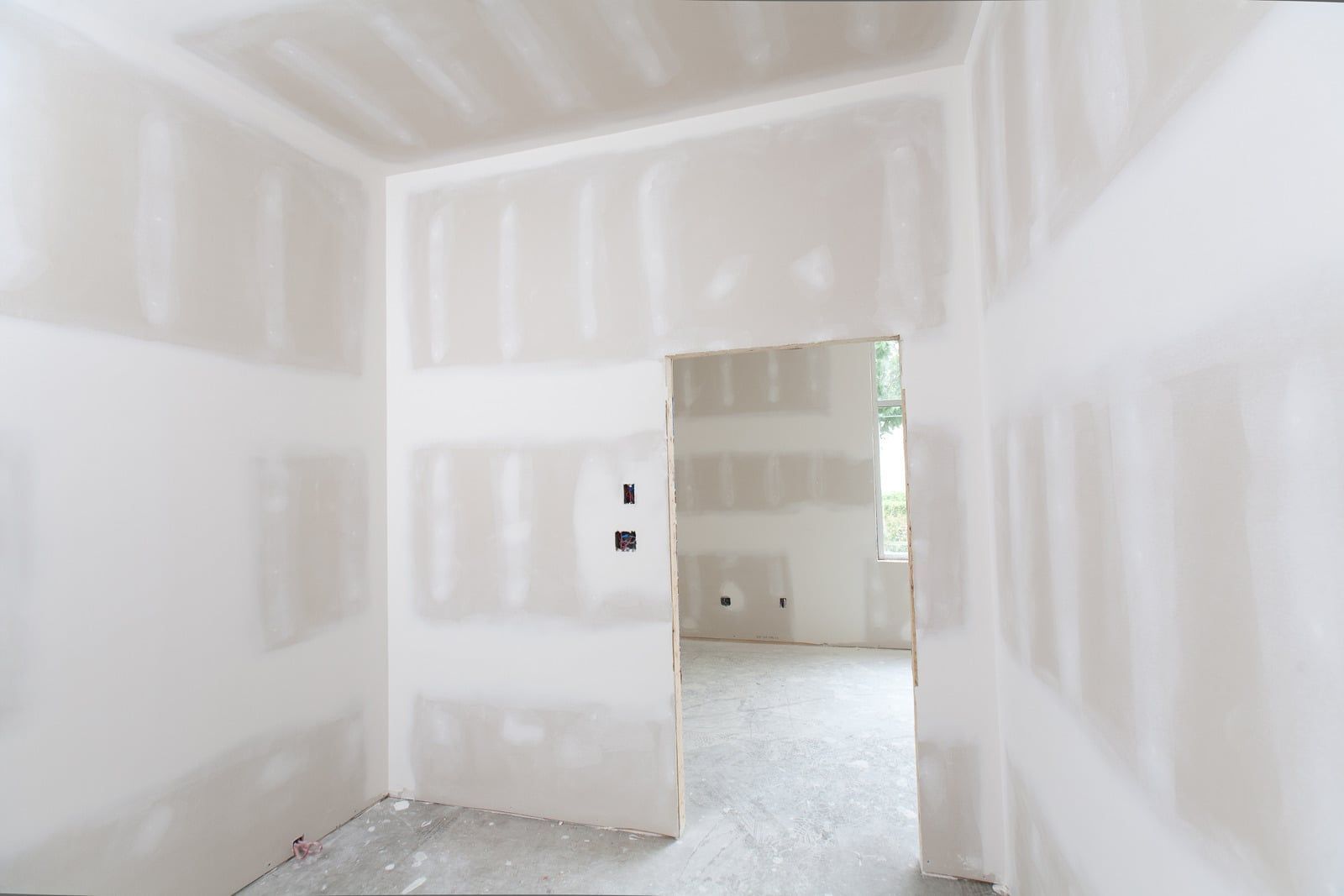
Hang, tape, and finish to blend: Fresh board is fastened and finished with taping, mudding, sanding, and texture matching so the repair disappears. Moisture-tolerant materials in damp rooms add insurance.
Prime and paint the right way: A sound, dry, properly primed surface takes paint cleanly and holds it. That is the difference between a repair that looks untouched and one that bubbles again.
Frequently Asked Questions
Can I just paint over a water stain on my drywall?
Not if you want it to stay hidden. A stain means moisture reached the board, so painting over it only traps the problem. Solve the leak first, dry the board, prime the stain, then paint.
How do I know if the drywall needs replacing or just refinishing?
Press on it. A firm, lightly stained board can be cleaned, primed, and refinished after the moisture source is fixed and it dries fully. Soft, spongy, crumbly, or musty boards have broken down and need replacing.
Why does my drywall keep getting damaged in the same spot?
A recurring stain or soft patch in one spot almost always means the water source was never fixed. A leak opening in heavy rain, a worn seal, or a poorly vented bathroom keeps rewetting it.
Is bubbling paint always a sign of a leak?
Usually it points to trapped moisture, though not always plumbing. It can come from a roof or window leak, from condensation in a stuffy room, or from paint applied over a damp, poorly prepared surface.
How fast does moisture in drywall turn into mold?
Faster than most people expect. On wet or damp material, mold can begin growing within roughly 24 to 48 hours when conditions stay warm and humid, which describes most of the year in this climate.
Can better ventilation and humidity control actually prevent this?
It helps a great deal. Keeping indoor humidity healthy, venting bathroom and kitchen exhaust outside, and moving air through closed rooms reduce ambient moisture. It will not stop an active leak, but removes background dampness.
Handling Damaged Drywall the Right Way
Soft, stained, or bubbling drywall is not a cosmetic flaw to paint away, it is a wall telling you moisture has been at work. Read the signs for what they mean, trace the water back to its source and stop it, dry everything out, and only then cut back to sound board and refinish. Skip the source and you are just resurfacing a problem that will bleed right back through the next humid stretch or heavy rain. Handle it in the right order and the wall goes back to being the quiet, smooth backdrop it is supposed to be.
Book a drywall moisture assessment and repair — Water-damaged walls only stay fixed when the moisture source is found first, the board is dried and cut back to sound material, and the surface is finished to blend in seamlessly. One Handy Haole traces the leak or humidity behind stained, soft, and bubbling drywall, handles the repair from framing to final coat, and matches your existing texture so it disappears. Backed by 20 years of experience serving Haiku, Hawaii, the team provides licensed and certified workmanship, a family touch, and free no-obligation estimates to restore your walls with lasting results. Reach out through the contact page to schedule your assessment.